How to Reduce Return Rates When Selling Camera Battery Chargers
Camera battery chargers can create costly returns when the wrong model, plug type, or voltage version is shipped. The problem starts small, but it can quickly become slow-moving inventory, retailer complaints, and blocked cash flow. I have seen that the best solution is to prevent wrong purchases before shipment.
To reduce return rates when selling camera battery chargers, wholesalers should confirm battery model compatibility, charger fit, plug type, and input voltage before placing bulk orders. Most avoidable returns come from wrong model matching, unclear labeling, and regional specification mistakes, not from after-sales service alone.
Many buyers focus on price first, and I understand that. In African and Latin American markets, price matters a lot. But from my after-sales experience, the lowest return risk usually comes from price plus correct matching, not price alone.
Why Do Camera Battery Chargers Get Returned So Often?
Returns happen when camera battery chargers do not match the battery, the camera system, or the local market specification. The buyer may order based on camera model only, while the actual charger should be matched to the battery model. This is one of the most common causes I see.
In many return cases, the product is not “bad.” It is simply the wrong charger for the customer’s battery. For wholesalers, this creates a bigger issue because one wrong bulk order can affect many retailers at the same time.
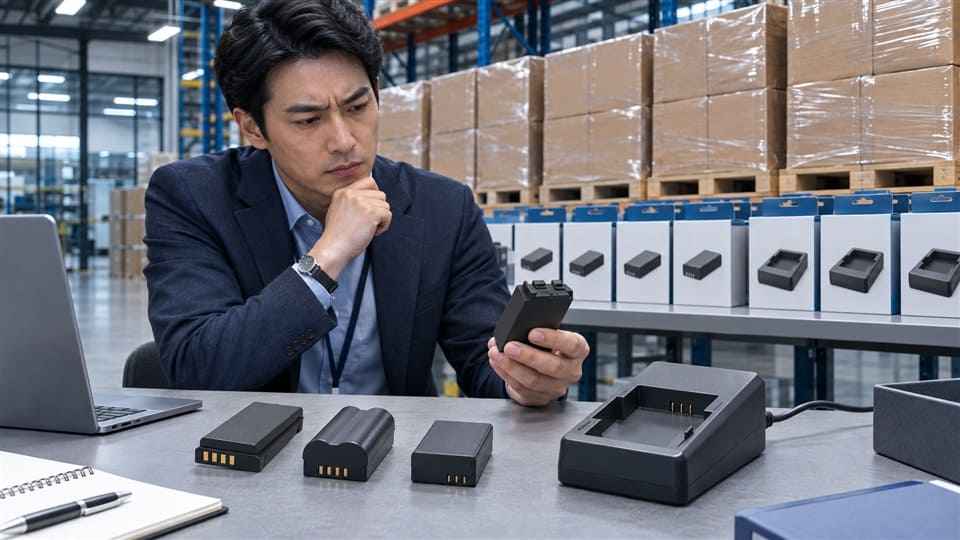
When I talk with customers after a return, the reason is often very practical:
- The buyer confused the camera model with the battery model.
- The retailer thought one charger could charge several similar-looking batteries.
- The charger slot looked close, but the battery did not fit well.
- The plug type was wrong for the target country.
- The input voltage was not confirmed before shipment.
- The label was not clear enough for shop staff to sell correctly.
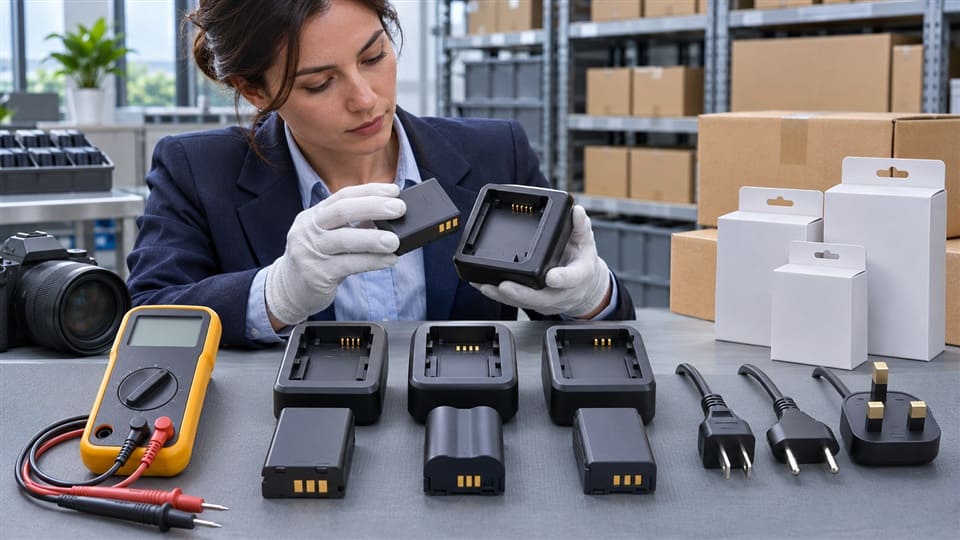
For example, a customer may ask for a charger for a Canon camera model. But the charger is usually matched to the battery type, such as LP-E6, LP-E8, LP-E10, or another battery series. If this step is skipped, the order can go wrong even when both sides are trying to be careful.
I usually suggest buyers treat returns as a procurement risk, not only a customer service issue. A wrong charger model can sit in the warehouse for months. Retailers may lose trust. Importers may need to discount the stock. So the real cost is not just one returned unit.
| Return Trigger | What Usually Went Wrong | Procurement Action |
|---|---|---|
| Wrong battery fit | Battery model was not confirmed | Match charger to battery model |
| Wrong market version | Plug type was not checked | Confirm plug before production |
| Voltage concern | Local input voltage was unclear | Check input range on label |
| Retailer confusion | Model label was too vague | Use clear sticker or list |
| Mixed order error | Similar models packed together | Confirm packing and SKU codes |
This is why I prefer to confirm details before shipment, even for repeat buyers.
How Can Wholesalers Confirm Camera Battery Chargers Compatibility?
Wholesalers can confirm camera battery chargers compatibility by checking the battery model first, then matching the charger model, slot design, output rating, and packaging label. The most important step is to stop ordering only by camera name.
The simple rule is this: battery model first, charger model second, camera model third. Camera names are useful, but battery codes reduce mistakes much faster.
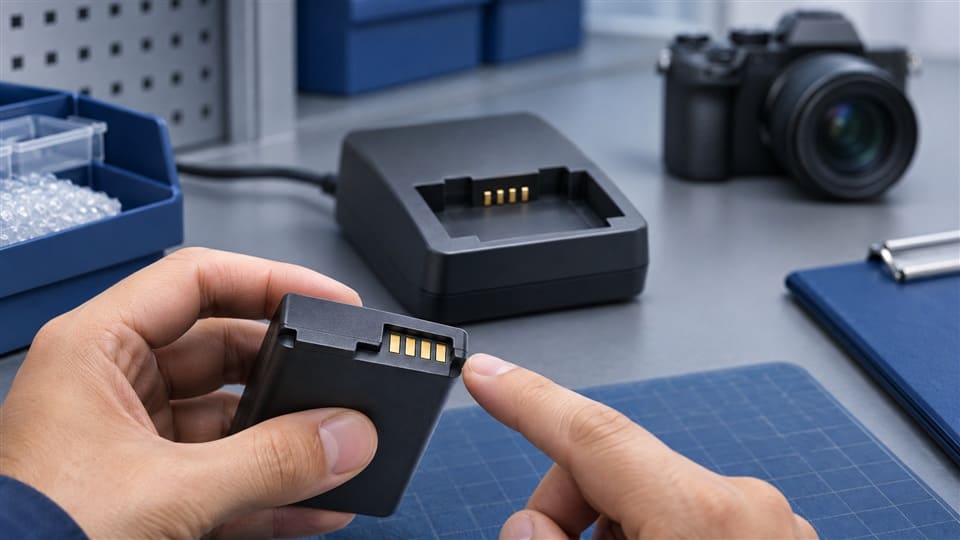
From my own work with African and Latin American customers, I often ask for a photo before confirming an order. A clear photo of the old battery, charger, or product label can prevent a lot of trouble. It only takes a few minutes, but it can save a full carton from becoming a return problem.
Here is the basic process I recommend:
-
Ask for the battery model code
This could be NP-FW50, LP-E6, EN-EL14, DMW-BLC12, or another model. -
Check the charger slot shape
Some batteries look similar but have different contact positions. -
Confirm the charger output
The output should match the intended battery type. Buyers should verify this from the supplier’s specification sheet. -
Check the package label
The box should clearly show the compatible battery model, not only the camera brand. -
Separate similar SKUs
Similar charger models should not be mixed in one carton without clear marks.
In my experience, many avoidable returns happen before the product even reaches the final customer1. The mistake happens at the buying stage.
A supplier should help here. I do not think all responsibility belongs to the buyer. A good supplier should provide:
- A clear compatibility list
- Product photos from several angles
- Plug type options
- Input voltage information
- Label and packaging details
- Carton marks for mixed orders
- Pre-shipment confirmation photos when needed
For large orders, I also suggest buyers create a simple internal checklist. It does not need to be complicated. Even a spreadsheet with battery model, charger model, plug type, quantity, and target country can reduce wrong-model purchasing.
Why Do Plug Type and Voltage Matter in Africa and Latin America?
Plug type and voltage matter because camera battery chargers must fit the real selling market. Africa and Latin America include many countries with different socket types and voltage standards2. If the charger plug does not match local use, the product becomes harder to sell.
For bulk importers, regional specification mistakes can be expensive3. A charger may work technically, but if the plug is inconvenient or the voltage label worries customers, retailers may reject it or request returns4.
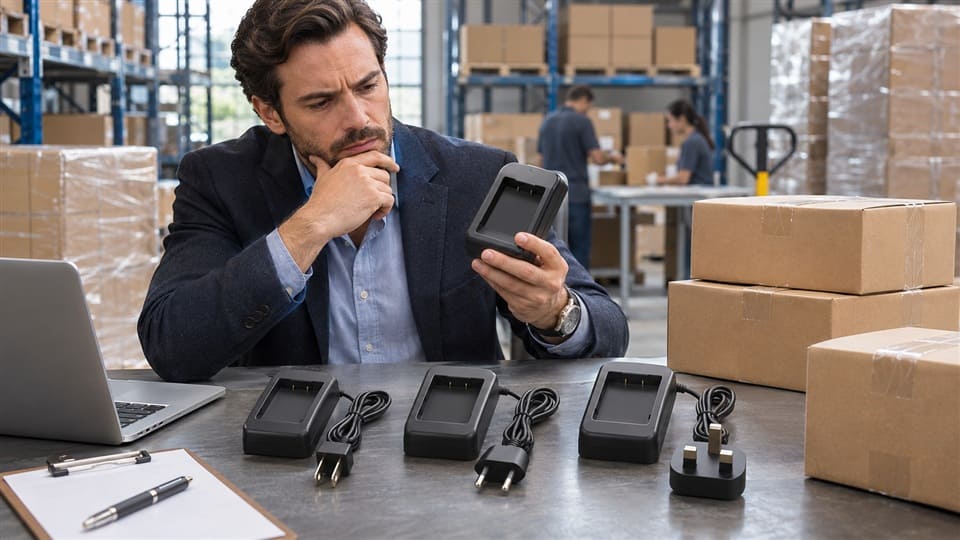
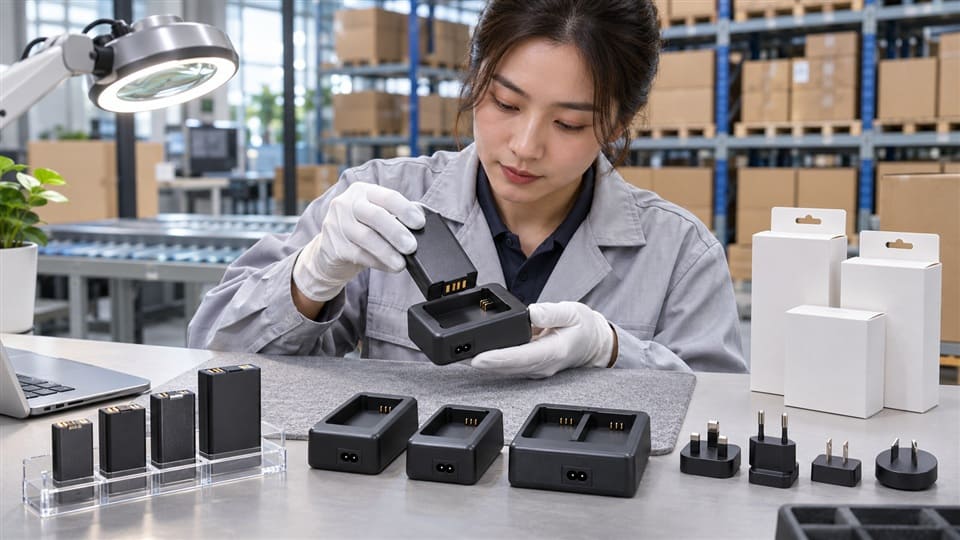
This point is very important for my customers in Africa and Latin America. Many markets use different plug types even within the same region. Some buyers need EU plugs. Some need US plugs. Some need UK plugs. Some may use adapters, but adapters are not always ideal for retail sales.
The same applies to voltage. Many modern chargers support wide input, often marked as something like 100–240V, but buyers should still verify the product label before ordering. I always suggest checking the actual charger marking, not just assuming it will work.
Here is a simple buyer checklist:
| Item to Confirm | Why It Matters |
|---|---|
| Plug type | Affects direct customer use |
| Input voltage | Reduces market concern and misuse |
| Frequency | Usually shown as 50/60Hz on labels |
| Label language | Helps retailers explain the product |
| Packaging photo | Prevents misunderstanding before shipment |
For example, if a buyer sells in a market where UK-style plugs are common, but the order arrives with EU plugs, the charger may still be usable with an adapter. But that creates friction. Retailers may complain. End users may feel the product is not made for their market.
So I treat plug and voltage confirmation as part of procurement, not a small detail at the end. Before shipment, buyers should ask:
- Which countries will receive this order?
- Which plug type do retailers expect?
- Is the charger label clear?
- Does the carton mark show the plug version?
- Are different plug versions packed separately?
This is not about making the product more expensive. It is about making sure the right product goes to the right market.
What Should Suppliers Provide Before Bulk Orders?
Suppliers should provide clear compatibility information, model labels, plug and voltage details, product photos, and order confirmation before bulk orders. This reduces misunderstandings and helps wholesalers avoid wrong inventory.
A good supplier does not only quote a price. A good supplier helps buyers confirm whether the charger is correct for the battery, the packaging, and the selling country.
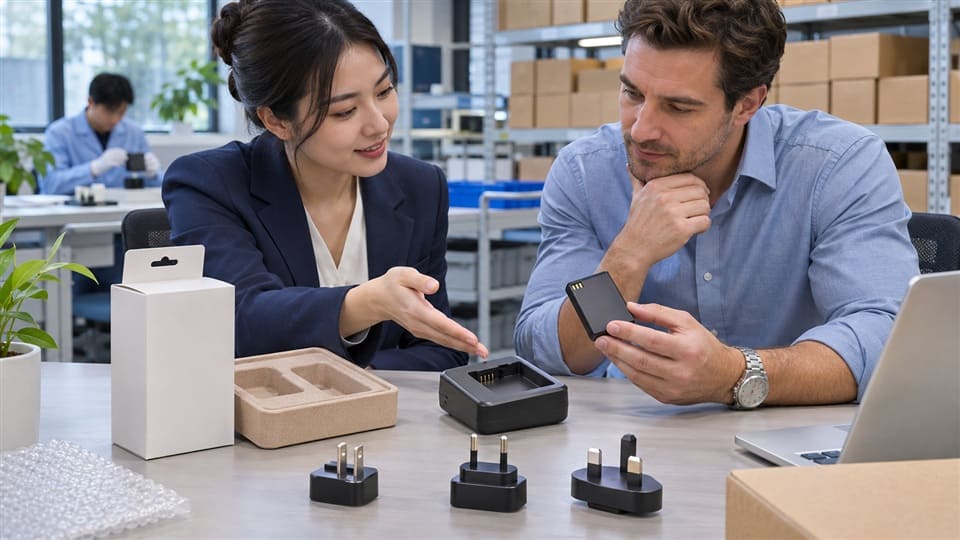
As a source-factory supplier, I know price is one of our advantages. But I also know that low price alone cannot solve return problems. If the model is wrong, even a cheap charger becomes expensive because it blocks cash flow.
Before production or shipment, I believe suppliers should help buyers confirm these points:
- Battery model compatibility
- Charger model number
- Plug type
- Input voltage label
- Output specification
- Package design
- Carton marking
- Quantity by SKU
- Any mixed-model packing
For wholesalers, I recommend asking the supplier for a compatibility table like this:
| Battery Model | Charger Model | Plug Option | Suitable Market Note |
|---|---|---|---|
| LP-E6 | LP-E6 charger | EU / US / UK | Confirm country before order |
| NP-FW50 | NP-FW50 charger | EU / US | Common for mirrorless users |
| EN-EL14 | EN-EL14 charger | EU / UK | Check retailer demand |
| DMW-BLC12 | BLC12 charger | US / EU | Confirm label clearly |
This kind of list helps the buyer’s sales team too. Retailers can sell more accurately when the box and invoice are clear.
I also suggest using pre-shipment photos for larger orders. The supplier can show:
- Product front and back
- Charger label
- Plug type
- Packaging label
- Carton mark
- Mixed SKU arrangement
This step is simple, but it prevents many avoidable returns.
For application-specific or regulated sales requirements, buyers should also verify certifications, safety documents, and local import rules with qualified professionals or local authorities. A supplier can provide documents, but the buyer should confirm whether those documents match the target country’s requirements.
Frequently Asked Questions
What is the most common reason camera battery chargers are returned?
The most common reason is wrong compatibility. Buyers may choose by camera model instead of battery model, or they may assume one charger fits several batteries. Clear battery code confirmation before ordering can reduce many of these avoidable returns.
Should I choose chargers only by price?
No. Price is important, especially for African and Latin American markets, but it should be paired with correct model matching, plug type confirmation, and voltage verification. A low-price charger can still be a good choice if the specifications are correct.
How can I avoid wrong plug type orders?
You should confirm the destination country, expected socket type, and retailer preference before placing the order. You should also ask the supplier for plug photos and carton markings, especially when ordering mixed plug versions.
Do I need a compatibility list from the supplier?
Yes. A compatibility list helps your purchasing team, warehouse team, and retailers avoid mistakes. It should show the battery model, charger model, and any important notes about fit or market version.
Conclusion
Reducing returns for camera battery chargers is mainly about preventing wrong purchases before shipment. I recommend confirming the battery model, charger fit, plug type, input voltage, labeling, and carton marks before every bulk order. Returns cannot be eliminated completely, but many wrong-model cases can be avoided with a clear supplier checklist. If you import camera batteries and chargers for African or Latin American markets, contact us to confirm models before your next order.
-
"What To Do if You’re Billed for Things You Never Got, or You …", https://consumer.ftc.gov/articles/what-do-if-youre-billed-things-you-never-got-or-you-get-unordered-products. Studies on supply chain management indicate that a significant proportion of product returns in the electronics sector are due to pre-sale errors, such as incorrect specifications or mismatched orders. Evidence role: statistic; source type: research. Supports: This source should provide data or analysis on the prevalence of avoidable returns caused by pre-sale errors in the consumer electronics supply chain.. Scope note: The data may not be specific to camera battery chargers but could apply to consumer electronics in general. ↩
-
"A Guide to United States Electrical and Electronic …", https://nvlpubs.nist.gov/nistpubs/ir/2017/NIST.IR.8118r1.pdf. Government and international standards organizations document the variety of socket types and voltage standards across Africa and Latin America, highlighting the need for region-specific product compatibility. Evidence role: definition; source type: government. Supports: This source should provide an overview of the diversity in socket types and voltage standards across African and Latin American countries.. ↩
-
"The Geography of Consumption and Local Economic Shocks", https://www.bea.gov/sites/default/files/papers/BEA-WP2023-1.pdf. Research on global supply chains highlights that regional specification mismatches, such as plug type or voltage, can lead to significant financial losses due to returns and unsellable inventory. Evidence role: statistic; source type: research. Supports: This source should provide data or case studies on the financial impact of regional specification mistakes in consumer electronics.. Scope note: The data may focus on broader consumer electronics rather than camera battery chargers specifically. ↩
-
"Chapter 3 Implications of transistor mismatch on analog …", https://www.ee.columbia.edu/~kinget/papers_files/chapter3.pdf. Studies on retailer behavior indicate that plug and voltage mismatches are common reasons for rejecting or returning consumer electronics, particularly in international markets. Evidence role: statistic; source type: research. Supports: This source should provide data or case studies on retailer rejection or return rates due to plug or voltage mismatches.. Scope note: The data may not be specific to camera battery chargers but could apply to similar products. ↩