How to Test Camera Battery Charger Quality Before Bulk Ordering
Camera battery charger quality is easy to misunderstand when you only test one sample on your desk. The sample may power on, charge one battery, and look fine. But after a bulk order arrives, unstable charging, hot shells, weak plugs, or wrong indicator lights can create returns, complaints, and damaged buyer trust.
To test camera battery charger quality before bulk ordering, buyers should check charging performance, heat behavior, plug and shell strength, indicator accuracy, protection claims, and bulk consistency. One good sample is not enough. Buyers should request a pre-production or bulk confirmation sample and agree on inspection points before mass production.
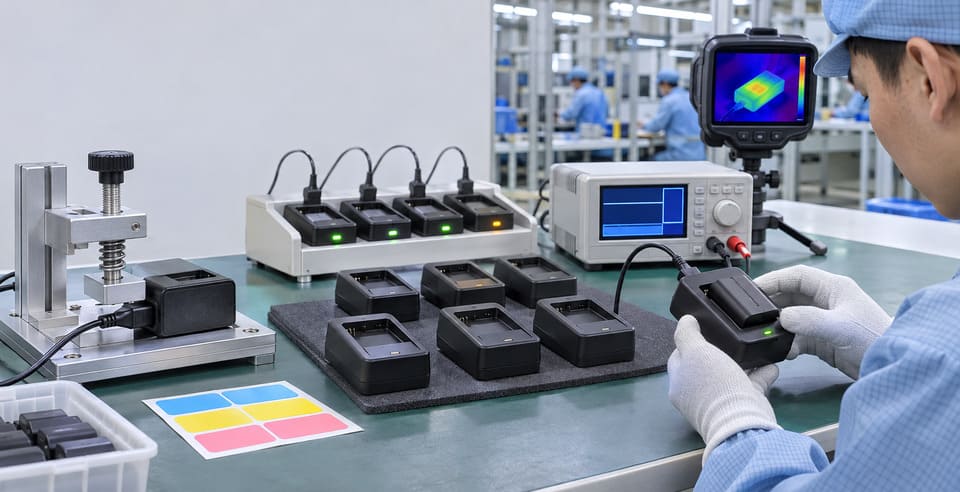
From my side as a source-side supplier, I have seen buyers in Africa and Latin America face one common problem: the sample passed, but the bulk goods were not consistent. So the real question is not “Can this charger work?” The better question is “Can this charger work safely and consistently in a bulk business?”
What Does Camera Battery Charger Quality Really Mean for Bulk Buyers?
Many buyers start with a simple power-on test. That is understandable. You receive the sample, insert a camera battery, and wait for the charging light. But this only shows that one unit can work once. It does not show whether the full order can satisfy your market.
Camera battery charger quality means the charger performs consistently, charges correctly, controls heat reasonably, uses acceptable materials, and matches the supplier’s promised configuration.1 For bulk buyers, quality is not only a technical issue. It is also a commercial risk-control issue.
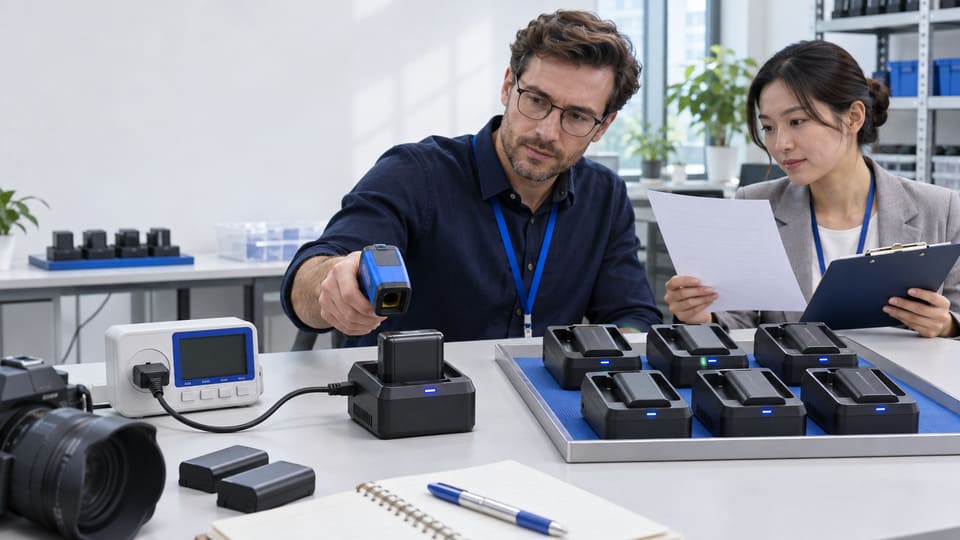
Look Beyond “It Can Charge”
A charger that can charge one battery is not automatically a good bulk product. In real business, the buyer needs to think about the full sales chain:
- Importer risk: customs, local standards, and after-sales cost2
- Wholesaler risk: complaints from shop owners and resellers
- E-commerce risk: bad reviews, returns, and platform penalties
- Brand risk: customers lose trust after one bad charging experience
In my own work, I have met buyers who focused only on the lowest unit price. Later, they found that the product was hard to sell again because customers complained about heating, loose plugs, or confusing indicator lights. The charger did not always fail completely. But it created enough small problems to hurt repeat orders.
Key Quality Areas to Check
| Test Area | What to Check | Business Risk Reduced |
|---|---|---|
| Charging performance | Charging starts, stops, and stays stable | Fewer “not charging” complaints |
| Heat behavior | Shell and plug do not become abnormally hot3 | Lower safety concern and fewer returns |
| Indicator lights | Red/green lights match real charging status | Less customer confusion |
| Plug and shell | Fit, strength, material, and finishing | Fewer broken units in transport or use |
| Bulk consistency | Sample matches mass production goods4 | Lower after-sales risk |
A good supplier should be able to explain the charger configuration clearly. For example, buyers can ask about input voltage range, output current, PCB design level, plug type, shell material, and whether protection features are included. However, buyers should also ask for evidence when certifications or protection claims5 are mentioned. A document is useful, but it should be checked, especially for large orders or regulated markets.
How Should You Test Camera Battery Charger Quality Before Mass Production?
It is risky to approve a bulk order after testing only one sample. The sample may come from existing stock, a better material batch, or even a manually selected unit. That does not mean the supplier is dishonest. It simply means one sample cannot represent thousands of pieces.
Buyers should test camera battery charger quality in stages: initial sample, pre-production confirmation sample, agreed inspection points, and random checks during or before shipment. This process helps confirm that the approved sample and the bulk production are the same in function, material, and appearance.
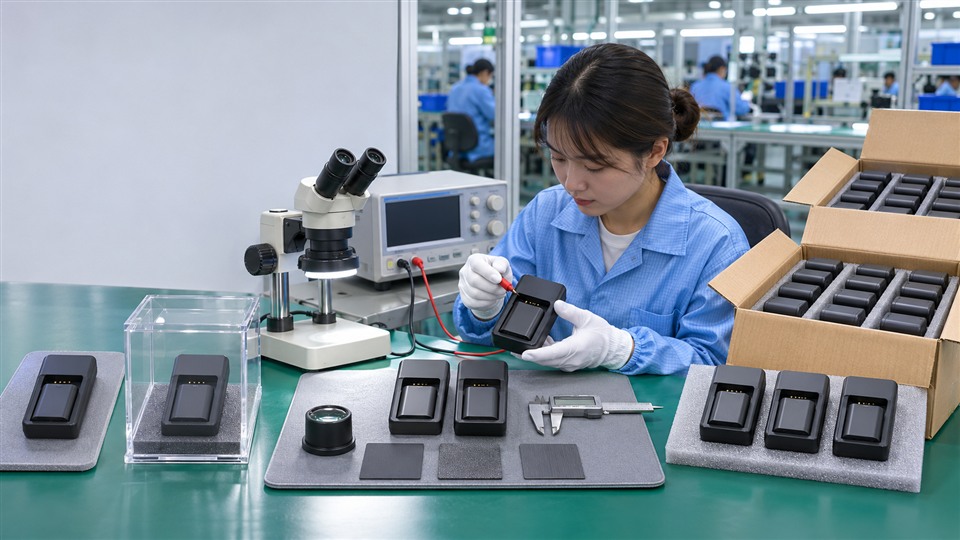
Step 1: Test the Initial Sample
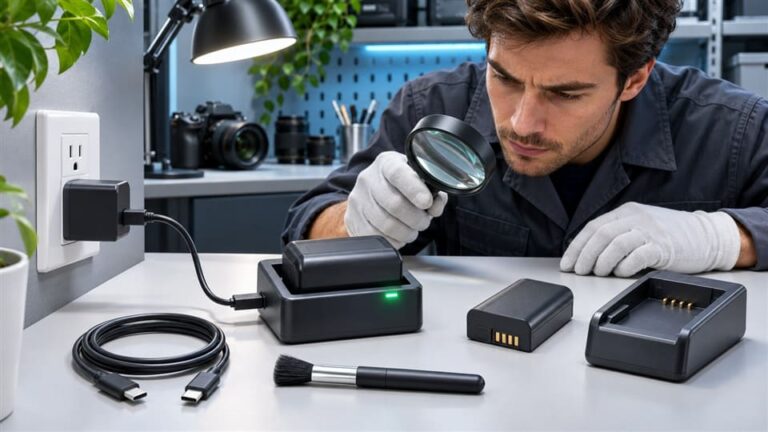
The first sample helps you decide whether the product direction is suitable. You can check:
-
Basic charging function
Insert a compatible camera battery and confirm that charging starts normally. -
Charging indicator logic
Check whether the red and green lights match the real charging status. -
Physical fit
Confirm whether the battery fits well and does not shake too much. -
Plug and cable condition
Pull gently and check whether the plug feels loose or weak. -
Shell finishing
Look for gaps, sharp edges, weak plastic, or poor printing.
This first test is useful, but it is still not enough for a bulk order.
Step 2: Request a Pre-Production Sample
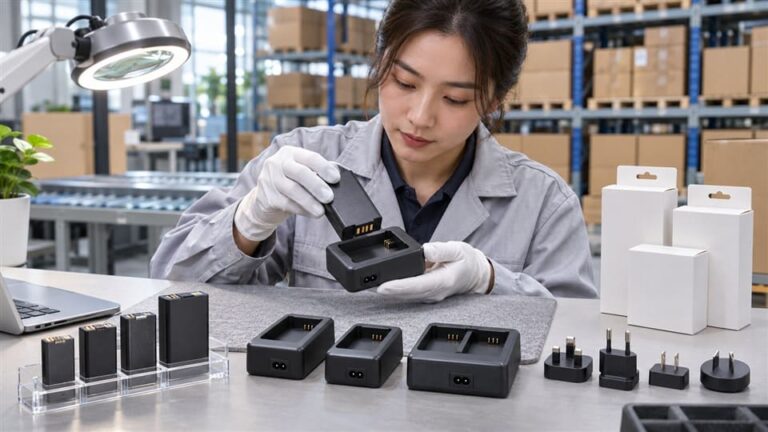
Before mass production, buyers should ask for a pre-production sample or bulk confirmation sample. This sample should use the same materials, same plug, same packaging, same label, and same configuration as the real order.
I usually suggest buyers confirm these points in writing:
- Model number and compatible battery type
- Input and output rating printed on charger
- Plug type for the target market
- Indicator light color and behavior
- Packaging design and barcode
- Manual language, if needed
- Any claimed protection features
This is important for buyers in Africa and Latin America because plug standards, voltage conditions, and customer expectations can vary by country. For example, a charger sold in Brazil, Mexico, Nigeria, or South Africa may need different plug styles, labels, or packaging details6.
Step 3: Set Simple Inspection Rules
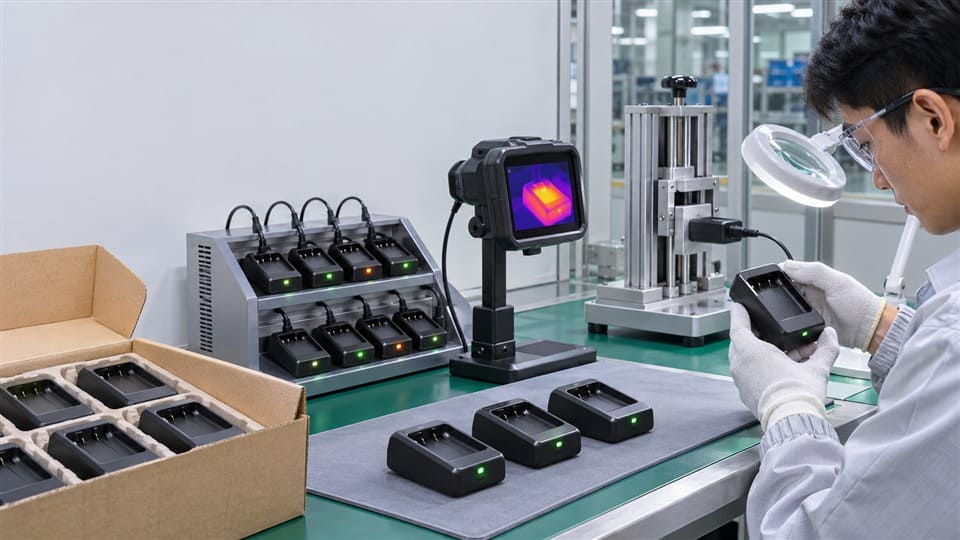
You do not need a full laboratory to reduce risk. But you do need clear inspection points. A buyer can ask the supplier or a third-party inspector to check:
- Random carton selection
- Appearance consistency
- Charging function on several units
- Indicator light function
- Plug and shell condition
- Label and packaging accuracy
- Quantity and carton marks
The key is simple: do not leave quality expectations only in chat messages. Put them into the order confirmation or purchase agreement.
Why Is One Good Sample Not Enough to Prove Camera Battery Charger Quality?
One sample can give a first impression, but it cannot prove bulk consistency. In camera charger business, many after-sales problems do not appear in the first five minutes. They appear after repeated use, long charging time, shipping pressure, or different batches of production.
One good sample is not enough because bulk camera battery charger quality depends on stable materials, controlled production, correct assembly, and consistent inspection. A buyer should compare the approved sample with mass production goods before shipment to reduce hidden order risk.
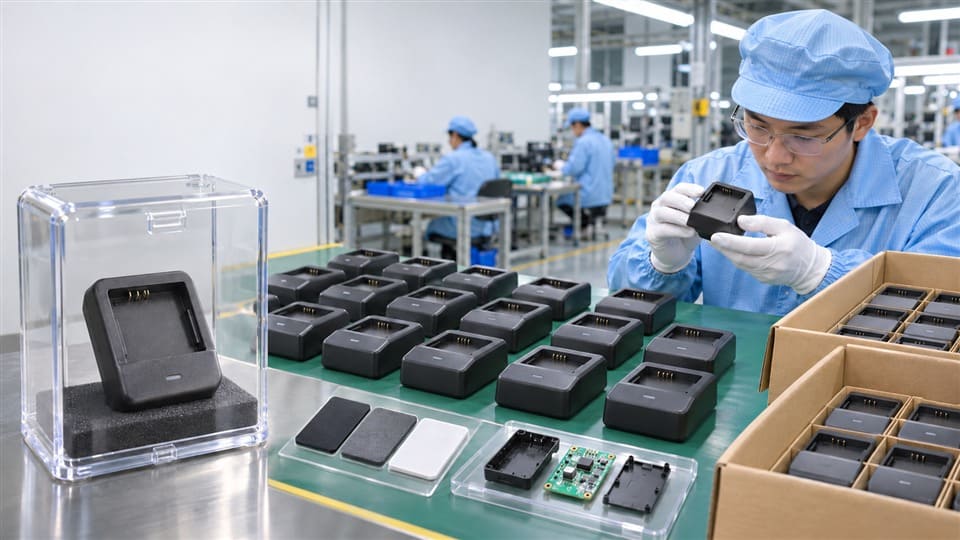
The Sample May Not Represent the Full Order
A sample can pass for many reasons. It may be from an older stock batch. It may use a different plug supplier. It may be selected carefully before sending. Again, this does not always mean bad faith. In manufacturing, small changes happen if nobody controls them.
For example, these changes can affect the final order:
- A different plastic shell supplier
- A cheaper plug component
- A changed PCB configuration
- Different printing or label material
- New workers on the assembly line
- Rushed production before shipment
Each change may look small. But in bulk orders, small differences can create big after-sales pressure.
Connect Each Test to a Business Result
Buyers should not test only for technical curiosity. Every test should connect to a business risk.
| Problem Found | Customer Reaction | Business Result |
|---|---|---|
| Wrong indicator light | “The charger is not working” | More complaints |
| Loose battery slot | “The battery cannot connect well” | More returns |
| Hot shell | “This product feels unsafe” | Lower trust |
| Weak plug | “It broke after a few uses” | Replacement cost |
| Inconsistent packaging | “This looks unprofessional” | Harder resale |
This is why I prefer to discuss charger quality from a procurement view. The buyer does not need to become an engineer. But the buyer should ask practical questions and request proof when needed.
How Does Price Affect Camera Battery Charger Quality and Risk?
Price matters, especially in competitive markets. Many of my customers in Africa and Latin America need a strong price because their customers are price-sensitive. I understand that very well. But price should be matched with configuration and risk, not judged alone.
A lower price does not automatically mean poor camera battery charger quality. However, different price levels may reflect differences in materials, charging stability, protection design, inspection level, and bulk consistency. Buyers should ask what configuration changes when the price changes.
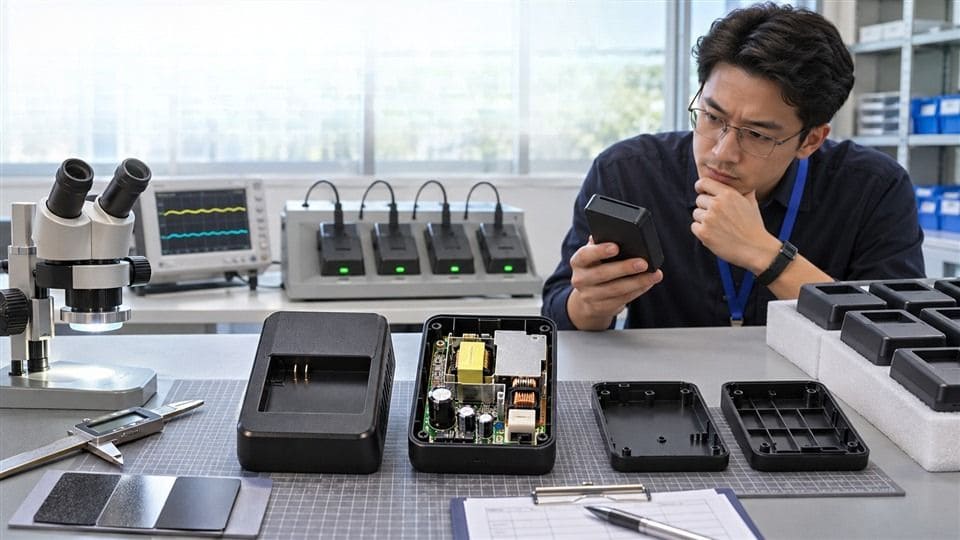
Ask What Changes With the Price
Instead of asking only “Can you make it cheaper?”, buyers should also ask:
- Will the PCB design change?
- Will the shell material change?
- Will the plug quality change?
- Will the output current remain the same?
- Will protection functions remain included?
- Will the packaging stay the same?
- Will inspection standards change?
This conversation is very important. A good supplier should be able to explain the difference between an economy version and a higher configuration version.
Match the Charger to Your Sales Channel
Different buyers need different quality levels. That is normal.
| Buyer Type | Main Concern | Suggested Focus |
|---|---|---|
| Street market wholesaler | Low price and basic function | Stable basic charging and strong plug |
| Camera shop distributor | Repeat customers | Better shell, clearer label, stable performance |
| E-commerce seller | Reviews and returns | Better consistency and packaging |
| Brand importer | Long-term reputation | Stronger inspection and verified documents |
If your market is very price-sensitive, you can still manage risk. You can choose a basic charger, but you should confirm the key points: charging stability, heat behavior, plug strength, and indicator accuracy.
For certifications, I always suggest buyers treat them as documents to verify, not magic guarantees. A certificate can be useful, but buyers should check whether it matches the product model, charger rating, and supplier information. For application-specific or regulated decisions, buyers should consult a qualified testing professional or local compliance advisor.
Frequently Asked Questions
Can I approve a bulk order after one charger sample works?
No. One working sample is only the first step. Buyers should request a pre-production or bulk confirmation sample and agree on inspection points before mass production. This helps confirm that the final goods match the approved sample.
What is the most important camera battery charger quality test?
There is no single test that proves quality. Buyers should check charging function, heat behavior, indicator lights, plug strength, shell quality, and bulk consistency together. The goal is to reduce business risk, not just pass one simple test.
Does a cheaper camera battery charger always mean lower quality?
No. A cheaper charger is not always poor quality. But lower prices may involve different materials, simpler protection design, or less inspection. Buyers should ask suppliers what changes when the price changes.
Should I ask for certificates before ordering camera battery chargers?
Yes, if your market or sales channel requires them. But you should verify that the certificate matches the exact product model and rating. Certificates are useful documents, but they do not replace sample testing and bulk inspection.
How many units should be checked before shipment?
The number depends on order size and risk level. For larger orders, buyers often use random inspection based on agreed sampling rules. At minimum, buyers should check several units from different cartons, not only one unit from the top carton.
Conclusion
Camera battery charger quality is not just about whether one sample can charge a battery. It is about reducing bulk-order risks before they become customer complaints. Buyers should test charging performance, heat behavior, plug strength, shell quality, indicator accuracy, and bulk consistency. They should also confirm the final configuration before mass production. If you are importing camera battery chargers for Africa or Latin America, I can help you compare price levels, sample options, and factory-side quality points before you place a bulk order.
-
"Battery Chargers", https://www.energy.gov/cmei/buildings/battery-chargers. Industry standards for electronic chargers outline key quality criteria, including consistent performance, heat management, and compliance with promised specifications. Evidence role: definition; source type: institution. Supports: The definition of camera battery charger quality, including performance, heat control, materials, and adherence to specifications.. Scope note: The source may provide general quality standards for electronic chargers rather than camera-specific chargers. ↩
-
"Internet Purchases", https://www.cbp.gov/trade/basic-import-export/internet-purchases. Government trade guidelines highlight common risks for importers, such as compliance with local standards, customs regulations, and managing after-sales service costs. Evidence role: general_support; source type: government. Supports: The risks importers face, including customs issues, local standards compliance, and after-sales costs.. Scope note: The source may discuss general import challenges and not focus exclusively on camera battery chargers. ↩
-
"Battery Safety | Environmental Health & Safety (EHS)", https://ehs.virginia.edu/Chemical-Safety/Battery-Safety. Safety standards for electronic devices recommend testing heat dissipation to prevent overheating, which can pose safety risks. Evidence role: mechanism; source type: institution. Supports: The need to test heat behavior in battery chargers to ensure safety and performance.. Scope note: The source may provide general safety standards for electronic devices rather than specific guidelines for camera battery chargers. ↩
-
"Understanding the Risks of Compounded Drugs", https://www.fda.gov/drugs/human-drug-compounding/understanding-risks-compounded-drugs. Manufacturing best practices emphasize the need for consistency between samples and bulk production to ensure product quality and customer satisfaction. Evidence role: general_support; source type: education. Supports: The importance of testing bulk consistency to ensure that mass production goods match the approved sample.. Scope note: The source may provide general manufacturing guidelines rather than specific examples for camera battery chargers. ↩
-
"General Use Products: Certification and Testing", https://www.cpsc.gov/Business–Manufacturing/Testing-Certification/General-Use-Products-Certification-and-Testing. Government and industry guidelines recommend verifying certifications and protection claims to ensure compliance with safety and quality standards. Evidence role: expert_consensus; source type: government. Supports: The importance of verifying certifications and protection claims for electronic products.. Scope note: The source may provide general advice on certification verification rather than specific to camera battery chargers. ↩
-
"Mains electricity by country", https://en.wikipedia.org/wiki/Mains_electricity_by_country. Government trade and compliance guidelines outline regional differences in plug styles, labeling, and packaging requirements for electronic products. Evidence role: general_support; source type: government. Supports: The need for different plug styles, labels, or packaging details for chargers in various countries.. Scope note: The source may provide general regional standards rather than specific examples for camera battery chargers. ↩