Why Is My Camera Battery Charger Getting Hot?
A camera battery charger getting hot can make any photographer nervous, especially when the charger sits near a socket for hours. The worry is real because heat, smell, or swelling can signal danger. The better question is not “Is any heat bad?” but “Is this normal warmth or unsafe overheating?”
A camera battery charger may get warm because it converts electrical energy while charging the battery. Mild warmth is often normal.1 However, you should stop using it if it becomes too hot to touch, smells burnt, changes shape, smokes, makes strange noise, or shows abnormal indicator lights. Always check battery compatibility, charger output, socket condition, and ventilation.
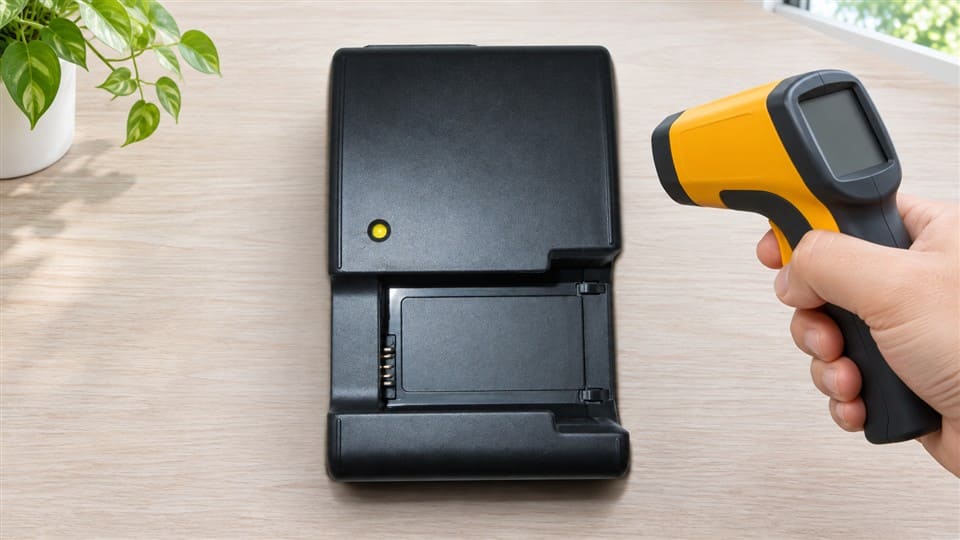
In my customer support work with camera chargers and camera batteries, I have seen two common reactions. Some users panic when they feel any warmth. Others ignore clear warning signs. The safe middle path is simple: understand what normal charging heat looks like, then act quickly when the signs change.
Is My Camera Battery Charger Getting Hot Normal?
A camera battery charger getting hot does not always mean it is defective. The problem is that normal warmth and risky heat can feel similar at first. If users do not know the difference, they may either worry too much or continue using a charger that should be stopped.
Normal charger warmth usually happens during active charging, especially when the battery is low. The charger may feel warm on the surface, but it should not smell, deform, smoke, or become painful to touch. If the heat is sudden, stronger than before, or paired with abnormal signs, stop charging.
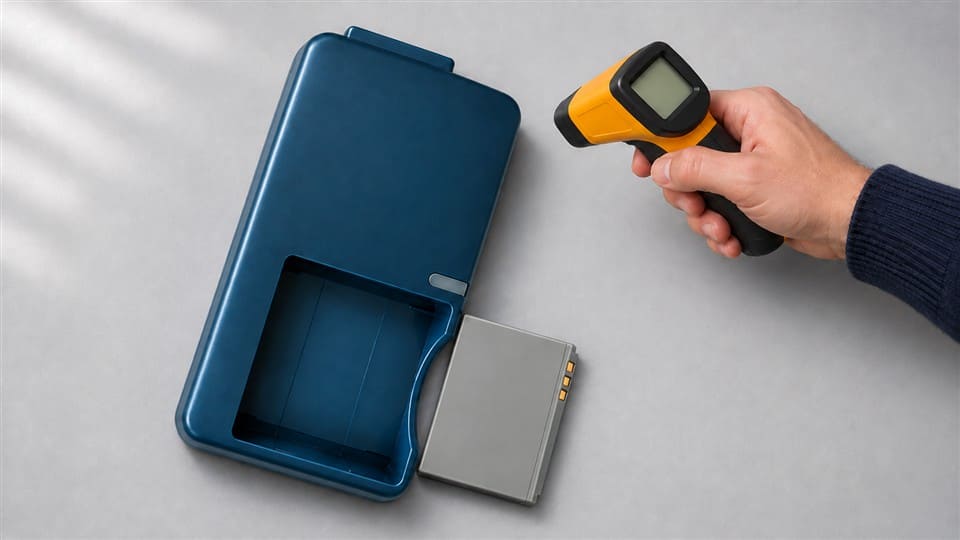
Why chargers create heat
A charger is not just “passing electricity.”2 It is managing voltage and current so the camera battery can charge in a controlled way. During that process, some energy becomes heat. This is why a charger can feel warm even when it works normally.
In customer conversations, I usually explain it like this:
“Warm is common. Burning smell, deformation, smoke, or sudden extreme heat is not common.”
That simple line helps many users calm down and check the real risk.
Normal warmth vs warning heat
| Situation | Usually Normal? | What I Would Do |
|---|---|---|
| Charger feels mildly warm during charging | Yes | Keep it in an open, ventilated place |
| Charger gets warmer when battery is very low | Often | Watch the charger and battery behavior |
| Charger is too hot to hold comfortably | No | Stop charging and unplug it |
| Burning smell appears | No | Stop using it immediately |
| Plastic changes shape or color | No | Replace the charger and check the battery |
| Indicator lights behave strangely | Maybe not | Stop and verify compatibility |
Practical checks before you panic
If your camera battery charger getting hot is your main concern, I would check these points first:
-
Is the battery model correct?
A charger designed for one battery series may not match another battery, even if it looks similar. -
Is the charger output suitable?
Look at the charger label and the battery requirements. The voltage and charging design must match. -
Is the charger in open air?
A charger under clothes, inside a bag, or near direct sunlight can heat up faster. -
Is the socket or cable loose?
Poor contact can create extra heat at the plug or connector.3 -
Did the heat behavior change suddenly?
A charger that used to be only warm but is now much hotter deserves attention.
I do not recommend opening the charger or trying to inspect internal parts. For most users, that is not safe or useful. If the charger behaves abnormally, the better step is to stop using it and replace it with a compatible, reliable unit.
When Is a Camera Battery Charger Getting Hot Unsafe?
A camera battery charger getting hot becomes unsafe when the heat comes with other warning signs. Heat alone needs context. Heat plus smell, swelling, smoke, noise, melted plastic, or strange lights is different.4 At that point, the goal is not diagnosis. The goal is risk reduction.
You should stop charging immediately if the charger is too hot to touch, smells burnt, smokes, deforms, makes unusual sounds, or shows abnormal charging lights. Unplug it from the wall if it is safe to do so, move it away from flammable items, and do not reuse it with another battery.
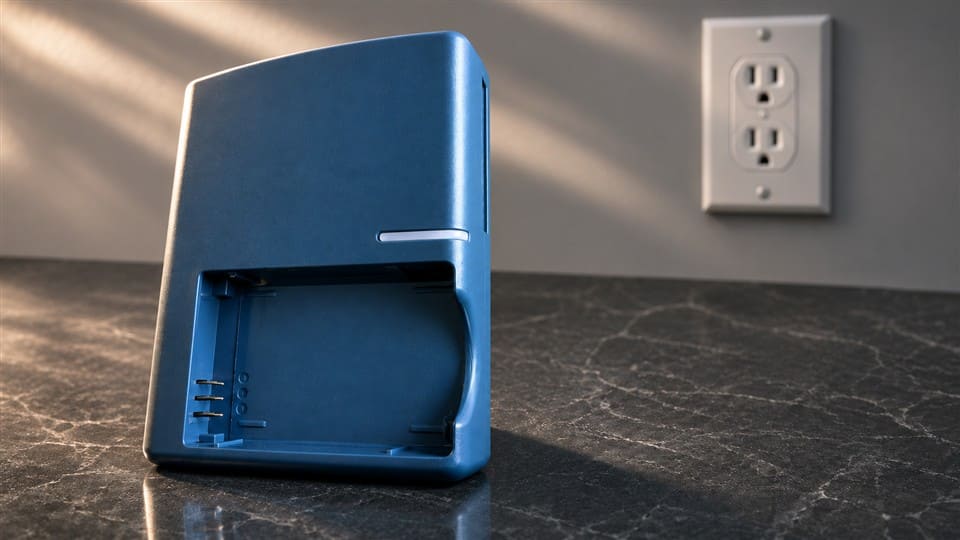
The warning signs I take seriously
From sales and after-sales support, I have learned that users often describe unsafe heat in very human words: “It smells bad,” “It is much hotter than before,” or “The light is blinking strangely.” Those descriptions matter.
Here are the signs I would not ignore:
- Burning or chemical smell5
- Smoke or visible vapor
- Plastic softening, swelling, or color change6
- Charger or battery too hot to touch
- Cracking, buzzing, or popping sounds
- Indicator light stuck, flashing abnormally, or not responding
- Battery not charging but charger keeps heating
- Heat at the plug, socket, or USB cable connection
A simple action path
If your camera battery charger getting hot feels abnormal, follow this practical path:
-
Stop charging.
Do not wait to “see what happens.” -
Unplug from the wall socket if safe.
Do not touch damaged plastic, exposed metal, or melted areas. -
Let the charger and battery cool in an open area.
Keep them away from paper, fabric, and other flammable items. -
Check the labels after cooling.
Confirm the battery model and charger model match. -
Do not test repeatedly with different batteries.
Repeated testing can create more risk. -
Replace questionable equipment.
A charger is usually cheaper than a damaged battery, camera, or safety incident.7
Why “it still works” is not enough
A charger can still turn on and still be a poor choice. For dealers and wholesalers, this matters because customers may return chargers with complaints like “charging is slow,” “battery becomes hot,” or “light never turns green.” These problems can come from many causes:
- Wrong battery model
- Poor contact in the charging plate
- Low-quality cable or adapter
- Weak socket connection
- Poor ventilation
- Aging charger components
- Battery that is already failing
This is why I avoid saying, “All heat means danger,” or “It is only user error.” Both are too simple. The practical answer is to look at compatibility, use conditions, and product quality together.
Can a Wrong Battery or Fast Charger Cause Extra Heat?
A wrong battery or mismatched fast charger can increase heat and after-sales risk.8 Many users focus only on charging speed, but speed is not the only value. A charger must match the camera battery type, output requirements, and charging design. Faster is not better if compatibility is poor.9
When charger output, battery model, or charging current does not match properly, the charger may run hotter than expected. A fast charger can also create more heat if the battery is not designed for that charging behavior. Always verify the battery model and charger specifications before use.

The common mistake: chasing speed only
I sell camera chargers and batteries to buyers in Africa and Latin America, including dealers and wholesale customers. One thing I often see is that buyers ask, “How fast can it charge?” before they ask, “Which battery models does it support?”
That order should be reversed.
For a camera battery charger, the first questions should be:
- Which battery model does it support?
- What is the charger output?
- Is it single-slot or dual-slot?
- Does it charge through USB, Type-C, or wall plug?
- What adapter should be used?
- Does the supplier provide clear model labeling?
- Are safety and compliance documents available for review?
Compatibility checklist
| Check Item | Why It Matters |
|---|---|
| Battery model number | Similar-looking batteries can have different requirements |
| Charger output label | Wrong output can increase heat or cause poor charging |
| Charging interface | Weak USB cables or adapters can create problems |
| Contact points | Poor contact can cause unstable charging |
| Ventilation | Trapped heat makes normal warmth worse |
| Supplier documentation | Buyers should verify certifications and product specs |
Why dealers should care
For dealers, the cost of a camera battery charger getting hot complaint is not only the product cost. It can also mean:
- Customer fear
- More returns
- Bad reviews
- Extra support time
- Battery damage claims
- Lower trust in the store
This is why I prefer to help buyers choose the right charger-battery combination from the start. As a source factory supplier, my price advantage is important, but price alone does not solve after-sales problems. Clear matching, stable quality, and honest product information are just as important.
What I tell wholesale buyers
For wholesale buyers, I usually suggest a simple product selection rule:
“Do not buy only by appearance or price. Buy by model match, output match, and supplier consistency.”
That rule is especially useful in markets where customers use many camera brands and replacement batteries. A charger that works well for one battery series may not be suitable for another.10 Good labeling and clear compatibility lists reduce confusion for both sellers and end users.
How Should Dealers and Users Reduce Charger Heat Problems?
Charger heat problems become easier to manage when users and dealers follow clear habits. The issue is not only the charger itself. The battery, cable, socket, airflow, and customer instructions all matter. Small steps can prevent many support disputes and safety worries.
To reduce heat problems, use the correct charger for the exact camera battery model, charge in a ventilated place, avoid damaged cables or loose sockets, and stop using the charger if abnormal signs appear. Dealers should also provide clear compatibility guidance and verify supplier documents before bulk purchase.
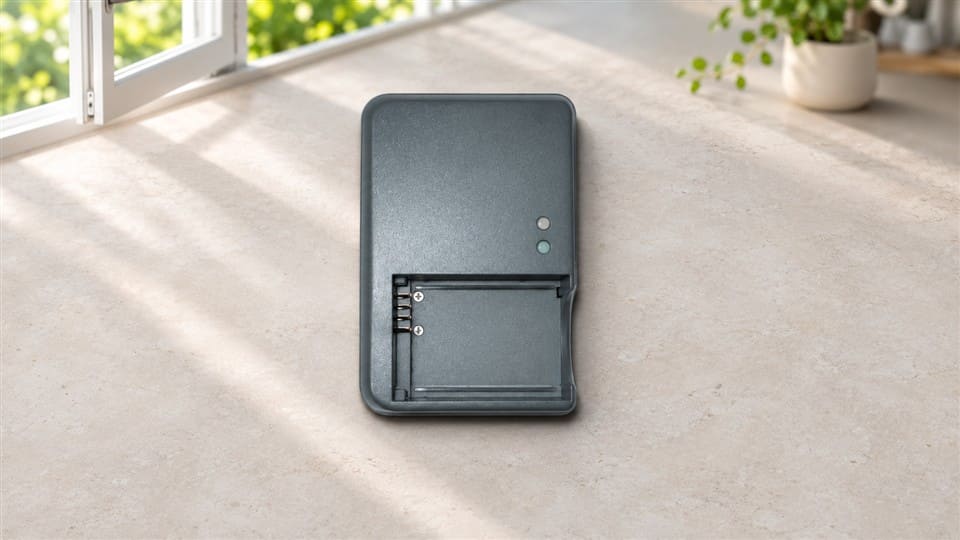
User tips that really help
If you are a camera user, these habits are simple but useful:
- Charge on a hard, open surface
- Keep the charger away from beds, bags, and direct sun
- Use the recommended cable or adapter
- Do not charge with a visibly damaged battery11
- Do not leave a suspicious charger running overnight
- Remove the battery after charging is complete
- Stop using equipment that suddenly behaves differently
These steps do not require technical knowledge. They only require attention.
Dealer tips for fewer disputes
If you are a retailer or wholesaler, I would focus on clear communication. Many disputes start because the customer does not know what is normal.
You can reduce confusion by giving buyers:
-
A compatibility list
List supported battery models clearly. -
Basic use instructions
Explain that mild warmth may happen, but smell, smoke, deformation, and extreme heat are warning signs. -
Adapter guidance
If the charger uses USB or Type-C input, explain what kind of adapter is suitable. -
Packaging labels
Make model numbers easy to read. -
After-sales screening questions
Ask customers about battery model, charger label, cable, socket, and ventilation before replacing the product.
Supplier selection for wholesale buyers
For B2B buyers, I suggest evaluating camera charger suppliers with a practical checklist:
| Supplier Question | Why It Helps |
|---|---|
| Can you provide clear supported battery models? | Reduces mismatch complaints |
| Are output specs printed clearly? | Helps users choose correctly |
| Can I verify compliance documents? | Supports procurement review |
| Is packaging customizable by model? | Helps local dealers sell correctly |
| Do you have stable production supply? | Reduces batch inconsistency |
| Can you support mixed orders of chargers and batteries? | Useful for African and Latin American markets |
As a supplier, I prefer this kind of discussion because it keeps the buying decision practical. I do not need to make exaggerated claims. Buyers simply need chargers and batteries that match their market, their customer needs, and their price range.
Frequently Asked Questions
Is it normal for a camera battery charger to feel warm?
Yes, mild warmth can be normal during charging because the charger converts and manages electrical energy. However, the charger should not smell burnt, smoke, deform, or become too hot to touch. If it feels abnormal, stop charging and check compatibility.
Should I keep using a charger that suddenly became hotter than before?
No, I would stop using it first. A sudden change in heat can point to a battery issue, charger aging, poor contact, bad cable, or socket problem. Check the battery model, charger output, cable, socket, and ventilation before deciding what to do next.
Can the wrong camera battery make the charger hot?
Yes, a mismatched battery can increase heat or cause unstable charging. Some batteries look similar but have different requirements. Always check the exact model number on the battery and confirm that the charger is designed for that model.
Does fast charging always make a charger hotter?
Fast charging can create more heat, but it depends on the charger design, battery compatibility, current, adapter, and ventilation. Faster charging is not automatically better. For safety and fewer after-sales problems, correct matching is more important than speed alone.
What should dealers tell customers about hot chargers?
Dealers should explain that mild warmth can be normal, but extreme heat, smell, smoke, deformation, noise, or abnormal lights are warning signs. They should also ask customers to confirm battery model, charger output, cable condition, socket quality, and airflow around the charger.
Conclusion
A camera battery charger getting hot is not automatically dangerous, but it should never be ignored. Mild warmth during charging can be normal. Strong heat, burning smell, smoke, deformation, strange lights, or sudden behavior changes are warning signs. In my work with camera chargers and batteries, I always recommend checking compatibility first. If you are a dealer or wholesale buyer in Africa or Latin America, contact me for matched camera battery and charger options from a source factory supplier.
-
"How hot is too hot for a charger? : r/UsbCHardware", https://www.reddit.com/r/UsbCHardware/comments/vvwv6t/how_hot_is_too_hot_for_a_charger/. Experts in battery technology agree that mild warmth during charging is a normal phenomenon due to energy conversion and heat dissipation processes. Evidence role: expert_consensus; source type: research. Supports: Confirms that mild warmth during the operation of a camera battery charger is normal.. ↩
-
"DOE Explains…Batteries", https://www.energy.gov/science/doe-explainsbatteries. Battery chargers generate heat as a byproduct of converting electrical energy into a form suitable for charging batteries, which involves managing voltage and current levels. This process is a normal aspect of charger operation, as described in electrical engineering principles. Evidence role: mechanism; source type: education. Supports: Explains how battery chargers generate heat during the charging process by managing voltage and current.. ↩
-
"Joule heating", https://en.wikipedia.org/wiki/Joule_heating. Electrical resistance at loose or poor connections can cause localized heating, which may lead to overheating in devices like battery chargers. Evidence role: mechanism; source type: education. Supports: Explains how poor contact at electrical connections can lead to increased heat generation.. ↩
-
"Tips to Help Charge Medical Devices Safely and Avoid Overheating", https://www.fda.gov/medical-devices/consumer-products/tips-help-charge-medical-devices-safely-and-avoid-overheating. According to safety guidelines, signs like burning smell, smoke, deformation, or unusual noises in electronic devices, including battery chargers, indicate potential safety hazards and require immediate attention. Evidence role: general_support; source type: government. Supports: Identifies signs of unsafe conditions in battery chargers, such as heat combined with smell, smoke, or deformation.. ↩
-
"Battery Safety | Environmental Health & Safety (EHS)", https://ehs.virginia.edu/Chemical-Safety/Battery-Safety. Government safety guidelines for electronic devices list burning or chemical smells as indicators of potential overheating or electrical failure. Evidence role: general_support; source type: government. Supports: Identifies a burning or chemical smell as a warning sign of potential safety issues in electronic devices.. ↩
-
"Thermal Changes in Polymers", https://books.byui.edu/plastics_materials_a/thermal_changes_in_p. Research on material science indicates that excessive heat can cause plastic to deform, swell, or change color, signaling potential overheating in electronic devices. Evidence role: mechanism; source type: research. Supports: Explains how overheating can cause plastic components in electronic devices to soften, swell, or change color.. ↩
-
"Battery Safety | Environmental Health & Safety (EHS)", https://ehs.virginia.edu/Chemical-Safety/Battery-Safety. Studies on consumer electronics maintenance suggest that replacing a faulty charger is generally more cost-effective than repairing or replacing damaged batteries or devices. Evidence role: statistic; source type: research. Supports: Provides a cost comparison between replacing a faulty charger and the potential expenses of repairing or replacing a damaged battery or camera.. Scope note: Specific cost comparisons may vary depending on the brand and model of the camera and charger. ↩
-
"Why is it dangerous to connect (as well as charge) two batteries of different …", https://www.reddit.com/r/batteries/comments/1hj6wkf/eli5_why_is_it_dangerous_to_connect_as_well_as/. Using a mismatched battery or charger can result in improper energy transfer, leading to overheating and potential safety hazards, as noted in battery safety guidelines. Evidence role: mechanism; source type: education. Supports: Explains how mismatched batteries or chargers can lead to overheating and safety risks.. ↩
-
"Battery Safety | Environmental Health & Safety (EHS)", https://ehs.virginia.edu/Chemical-Safety/Battery-Safety. Research indicates that fast charging with incompatible chargers can lead to increased heat generation and potential damage to the battery. Evidence role: general_support; source type: research. Supports: Discusses the potential risks of using fast chargers with incompatible batteries.. ↩
-
"Battery charger", https://en.wikipedia.org/wiki/Battery_charger. Battery chargers are typically designed to match specific battery models to ensure proper voltage and current delivery, reducing the risk of overheating or damage. Evidence role: general_support; source type: education. Supports: Explains why battery chargers are often designed for specific battery models and the risks of using incompatible chargers.. ↩
-
"Battery Safety | Environmental Health & Safety (EHS)", https://ehs.virginia.edu/Chemical-Safety/Battery-Safety. Safety guidelines from regulatory agencies warn against charging damaged batteries, as they can lead to overheating, fire, or other safety hazards. Evidence role: general_support; source type: government. Supports: Explains the safety risks associated with charging visibly damaged batteries.. ↩